How to play Hood World
Everything on this page is how the game behaves right now. Where a number is set in the code, it is printed here exactly. Where it is not, the sentence stays qualitative on purpose.
Getting started
Open mmohood.world/play. The world loads in the page — there is no launcher, no download and no patcher. First load pulls the art once and then caches it.
Guest or wallet
The main menu offers two doors, and both lead to the same game.
- Play as guest. You are in immediately. Your character is saved in this browser. Clear your site data, or open the game on another machine, and that character is not there.
- Connect wallet. You sign a message — nothing is spent, no transaction is sent — and you get a character roster stored on the server. One wallet holds up to twelve characters, and they follow you to any machine you sign in from. If you already made a guest character in this browser, the roster offers to claim it.
Guest play is never going away. Connecting a wallet buys you a server-side save and a roster, nothing else. It grants no item, no currency and no advantage of any kind.
Creating a character
Pick one of the four classes (below), name the character, and you spawn on the plaza at Vesperfall. Autosave runs while you play, so you can close the tab and come back. A short tutorial walks you through the first few actions; it can be turned off.
Controls
The same table is in the game under Esc → Settings → Controls, or straight from the Controls tile on the feature bar.
| Key | Action |
|---|---|
| W / ↑ | Move forward |
| S / ↓ | Move back |
| A | Strafe left |
| D | Strafe right |
| ← / → | Turn the camera |
| Space | Jump |
| Shift | Sprint |
| Left-drag / right-drag | Orbit the camera |
| Scroll | Zoom in and out |
| Left-click | Select a target, or talk to an NPC |
| Right-click | Use, equip or clear a slot |
| Click a nameplate | Open another player's menu |
| Key | Action |
|---|---|
| Tab | Cycle target |
| 1–9, 0 | Hotbar slots 1 to 10 |
| R | Toggle auto-attack |
| F | Talk / interact |
| Key | Opens |
|---|---|
| M | Map |
| L | Quest log |
| B or I | Inventory |
| C | Character sheet |
| K | Skill book |
| O | Friends & party |
| U | Guild |
| G | Wishes |
| V | Wardrobe |
| J | Achievements |
| H | Recall home |
| Enter | Chat |
| Esc | Settings, or close the panel that is open |
Camera: Free or Auto
Settings → Gameplay has a Camera setting. In the game's words: "Free: the camera only turns when you turn it. Auto: while you run it also eases back behind your character." Free is the default. There is also an Invert Camera Y switch next to it.
Keys cannot be rebound yet — that is coming.
Recall home
H channels for six seconds and returns you to your home point — Vesperfall Plaza by default. Moving or taking damage cancels it, and it then goes on a five-minute cooldown. It is also the way out if you get stuck on terrain.
The HUD
- Your frame, top left. A crimson health bar and an indigo mana bar. Health is red here, not green — that is deliberate.
- Target frame. Appears when you have something targeted, with its own health bar and a cast bar when it is casting at you.
- Hotbar, bottom centre. Ten chamfered slots. Slots 1–8 are skills, and slots 9 and 0 are fixed potion slots, which start holding your minor health and minor mana potions. A slot you have not trained yet still shows the skill, dimmed, with a padlock or a coin so you know what is coming.
- XP bar sits under the hotbar with your level in a gold diamond at its left end.
- Minimap, top right. Circular, in a bronze ring, showing about forty-two metres around you. Enemies, bosses, quest objectives, vendors, NPCs and party members get their own markers.
- Feature bar sits to the left of the minimap: thirteen painted tiles, each labelled with its panel and its key — Map, Quests, Bag, Hero, Skills, Friends, Guild, Wishes, Wardrobe, Settings, Controls, Events and Deeds. A tile grows a dot when there is something new behind it (a pending friend request or guild invite, an unclaimed daily rite, an event you have not read).
- Quest tracker under the minimap shows up to three tracked quests and their objectives. A large chevron in the world points at the current objective of the first one.
- Chat, bottom left. Eight tabs — All, Global, Combat, Loot, Zone, Party, Guild and Whisper. Press Enter to type. The tab you have selected is also the channel you send to, so switch to Party before you talk to your party.
Classes
Four classes, eight skills each. Skills unlock at levels 1, 1, 4, 6, 8, 10, 13 and 16. The ones below level 6 are free; the rest are taught by Sera Vance, the skill trainer on the village plaza, for gold (see Progression).
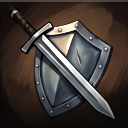
Warrior
Tank · Sword & shieldHolds the line. High armour, taunts, and the only class that can reliably keep something angry at it.
- Slash, Shield Bash — a bash stuns for 1.6 s and shortens Execute
- Battle Cry +25 % attack and taunts within 10 m
- Whirlwind, Shield Wall (armour ×2.5), Charge
- Execute — triple damage below 30 % HP; Last Stand at 16
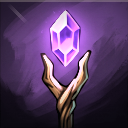
Mage
Damage · StaffFrost and fire. The most fragile class and the one that ends a pull fastest if it gets to cast.
- Ice Bolt chills and stacks Arcane Charge; Fireball burns
- Frost Nova freezes everything within 6 m for 2 s
- Arcane Shield, Blizzard, Blink
- Meteor — telegraphed, extra damage on frozen targets; Time Warp at 16
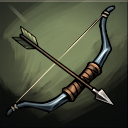
Archer
Ranged · CrossbowKites. High single-target damage at range, and the best tools for not being where the enemy is.
- Quick Shot returns mana; Piercing Arrow bleeds
- Multishot, Evasive Roll (backwards 6 m, off the global cooldown)
- Poison Arrow, Rain of Arrows
- Snipe — a 2 s aimed shot at 32 m; Hunter's Mark doubles physical damage taken

Shaman
Healer · Wand & spellbookKeeps people alive and still contributes damage. The class a party notices when it is missing.
- Lightning Strike — guaranteed crit on chilled targets; Mend
- Healing Rain, Earth Totem (damage and slow within 6 m)
- Chain Lightning jumps to three; Spirit Link heals and shields
- Thunderstorm — five hits over the target ground; Ancestral Guard at 16
Combat basics
Targeting and facing
Click an enemy or press Tab to cycle to the next one. A target gets a rotating gold ground ring and a frame at the top of the screen. If the thing you are casting at is more than 100° off your facing, your character turns to face it before the cast goes out — so a cast can feel a beat late if you fire it over your shoulder.
The global cooldown
Almost every skill puts all your others on a 1.0-second global cooldown. A handful are deliberately off it — Shield Wall, Last Stand, Arcane Shield, Blink, Evasive Roll, Hunter's Mark, Spirit Link — so a defensive is never stuck behind a rotation.
How a hit is worked out
In this order:
- Dodge. Physical hits on you only: 5 % base, plus 0.15 % per point of Dexterity, capped at 12 % from Dexterity.
- Variance. Every hit rolls within ±8 %.
- Crit. Your crit chance against your crit multiplier — 1.5× for Warriors and Shamans, 1.6× for Mages, 1.8× for Archers.
- Mitigation. Defence against physical, Resist against magic, on a diminishing curve.
- Level difference. Hitting something above your level costs you 3 % damage per level, capped at 30 %. There is no penalty in the other direction.
- Shields soak what is left before your health does.
Auto-attack
R toggles it. While it is on and you have a hostile target in range, your class's first skill repeats on its own. It switches off when the target dies, when you retarget, or when you do.
Potions
Potions live in hotbar slots 9 and 0, are instant, and share a three-second cooldown between them. A Minor Health Potion restores 60 health, a Health Potion 180. They stack to twenty and are sold by both vendors on the plaza.
Dying
Death costs you nothing. No experience is lost, no gold is lost, and there is no durability damage — that was an explicit design decision, not an oversight. You wait out a five-second countdown, press Respawn, and wake up at your home point.
Progression
Experience and levels
The cap is level 30. The curve is 100 · L1.55 + 40 · L,
which is 140 experience for your first level and 19,641 for your last — about
237,000 across the whole run. Killing something above its zone's base
level pays more; killing something well below your level pays the same experience but far less
gold.
Attributes
Every level gives you two attribute points to spend in the Character panel (C). The tooltips in game read exactly:
| Attribute | Per point |
|---|---|
| Strength | +1.6 Attack |
| Intellect | +1.8 Spell Power, +5 Max MP, +0.2 Resist and +0.06 MP Regen |
| Dexterity | +0.6 Attack and +0.3 % Crit Chance |
| Vitality | +9 Max HP, +0.3 Defense and +0.05 HP Regen |
Dexterity also feeds your dodge chance, which the tooltip does not mention. Points are spent one at a time and are not refundable today.
Training skills
Open the Skill Book (K) to see all eight of your class's skills and the level each unlocks at. Anything unlocking below level 6 is free. The rest cost gold at the trainer:
| Unlocks at | Cost |
|---|---|
| Level 1 and 4 | Free |
| Level 6 | 59 g |
| Level 8 | 98 g |
| Level 10 | 144 g |
| Level 13 | 229 g |
| Level 16 | 329 g |
Quests & zones
The quest chain
There are eleven quests, and they form one chain from level 1 to the end of the game. A quest appears when you meet its level requirement and have handed in the one before it. Four people give them out: Elder Maren on the Vesperfall plaza, Marshal Rook in Cinderfell, Warden Ysolde at Thornfen and Old Cairn at Ashfall Pass.
L opens the quest log — objectives, progress, hints, rewards and a Track button. The tracker under the minimap holds up to three tracked quests, and a large chevron in the world points at the first objective of the first one. It is hard to lose.
The ten zones
The world is one continuous 480 × 480-metre valley. Nothing is instanced and nothing loads between zones — you walk from one into the next, and the fog, the music and the light change around you.
| Zone | Levels | What is in it |
|---|---|---|
| Vesperfall | 1–3 | The hub. Vendors, the trainer, the quest giver, guards, and grubs in the outskirts |
| Sunlit Meadow | 2–5 | Open grass. Grubs and the first skeletons |
| Whisperwood | 4–8 | Dense forest, fog closing to eighteen metres. Skeleton rogues and warriors; a Bone Stalker elite |
| Mirror Lake | 5–9 | Still water with a real reflection. Skeleton mages on the far shore |
| Hollow Graves | 8–13 | The graveyard. Dense undead and a Skeleton Champion |
| Ashen Ruins | 12–16 | Ruined halls, elites and hexers — and the Bone Lord in his arena |
| Cinderfell | 17–21 | Kilns and brigands on the south road. Where the second half starts |
| Thornfen | 21–25 | Drowned marsh. Fenstalkers, mirecallers, drowned knights |
| Ashfall Pass | 25–28 | The high road. Raiders and a champion |
| Barrowdeep | 28–30 | A crypt cut into the hillside, and the Hollow Forgewright at the end of it |
M opens the map. A zone you have visited stays discovered, which is what makes fast travel possible — see Waystones.
Loot & gear
Rarity
Five tiers, and the tier really is the stat budget: Common, Uncommon, Rare, Epic, Legendary. An Uncommon carries one affix, a Rare two, Epics and Legendaries three. Rare and better also roll a quality value worth up to +15 % on top, which is why two Rares of the same name are not the same item. Rarity is visible on the weapon in your hand, not just in the tooltip.
Drops land in the world with a coloured beam, last two minutes, and are picked up by walking over them. Your bag holds 30 slots; you have six equipment slots — weapon, offhand, head, chest, legs and ring.
Vendors
- Selling equipment pays 25 % of its listed value. Consumables and materials sell for their full listed value; the three junk materials sell for half.
- Buying costs 4× the listed value. Vendor stock unlocks as you level.
- Reforge at the blacksmith re-rolls an item's quality value for 65 % of its buy price. It can go down. That is the gamble.
Tempering
Weapons only, at the Forge tab. Each temper level adds 4 % to the weapon's primary stat, to a maximum of +10 — a 1.40× weapon, deliberately just under what one rarity step would give you, so tempering never replaces finding something better.
Every strike at the Forge is a chance, not a guarantee. Your first two levels, +1 and +2, always land. After that the odds fall the higher you push:
| Level | +1 | +2 | +3 | +4 | +5 | +6 | +7 | +8 | +9 | +10 |
|---|---|---|---|---|---|---|---|---|---|---|
| Chance | 100% | 100% | 85% | 75% | 65% | 55% | 45% | 35% | 27% | 20% |
A failed strike still costs the gold and the Ember Shards it asked for — but it keeps your weapon's level exactly where it was, and never destroys it. Forge Cores are only spent when a strike succeeds: missing at +7 never eats the two cores that step needs.
Heat: every failed strike on a weapon adds 5 % to that weapon's next attempt, at any level — the forge remembers a losing streak and leans back your way. A success cools it back to nothing. Because of heat, reaching +10 costs about twice the gold and Ember Shards it used to, on average — the ceiling itself and every other cost are unchanged.
Each level's base price is gold and Ember Shards (4, then 6, then 8 … 130 shards for one clean run to +10, more once retries are counted). Shards drop from Ashen Ruins onwards and pour out of the late zones. Forge Cores — rarer, unsellable, from bosses and elites — are what raise your ceiling: +3 from the start, +6 at level 12, +8 at level 18, +10 at level 24, each step costing one core the first time you push into it, on the strike that actually lands. A tempered weapon glows, in four visible steps.
The Forge also has Hone, which keeps the better quality roll of two duplicates, and Reclaim, which moves temper levels from one weapon to another of the same class — you keep 80 % of them, and it costs a Forge Core.
Waystones and fast travel
A Waystone is a consumable sold by both plaza vendors from level 1. Using one from the map teleports you to any zone you have already discovered. It costs no gold beyond the stone itself, it consumes the stone, and it will not work while you are in combat.
Wishes
Everything you can win here is cosmetic. No outfit, weapon skin, trail, title or nameplate frame carries a stat, an attribute, a drop rate or an experience rate — and that is enforced by a test that equips every cosmetic in the game in turn and checks your stat block does not move by a single byte.
Sigils
Wishes are paid for with Rite Sigils. A Sigil costs 5,600 gold from the Wishwarden — gold you earned in the world. There is no way to buy gold, and no way to buy a Sigil or anything else in this game with money. You can hold up to forty Sigils at once; free ones granted over that cap wait in a queue until you have room.
Sigils also arrive free:
- The daily rite — one Sigil, once per day, claimed by opening the panel.
- First clears — one Sigil the first time you finish each quest.
- First blood — one Sigil the first time you kill each kind of enemy.
- Every fifth level to 30.
- Achievements — 34 Sigils across the whole catalogue.
Odds and pity
These are the published rates, copied from the panel:
| Outcome | Base | Guarantee |
|---|---|---|
| 5★ | 0.600 % | Rises from the 74th wish without one; guaranteed on the 90th |
| 4★ or better | 5.100 % | Guaranteed on the 10th wish without one |
| 5★, long run | 1.60 % | Including guarantees |
| 4★, long run | 12.4 % | Including guarantees |
| 3★, long run | 86.0 % | — |
A 5★ on a limited banner is a 50/50 between the featured item and the standard pool; lose that coin flip and your next 5★ is the featured one. Pity is counted separately for the limited banners and the standard banner, and it carries across a limited banner rotating.
Ember Dust
A duplicate turns into Ember Dust — 2 for a 3★, 8 for a 4★, 40 for a 5★. Dust buys a cosmetic outright: 25 for a 3★, 120 for a 4★, 900 for a 5★. It cannot buy a banner's currently-featured 5★, a keepsake or an achievement title.
Keepsakes
Your lifetime wish count also pays out on its own track, with no timer and nothing that expires: a title at 25 wishes, a nameplate frame at 75, another title at 150 and another frame at 300. Those four never appear in any wish pool.
What a wish is worth in time
Sigils are priced at roughly 0.30 hours of endgame play each. A ten-wish — which guarantees a 4★ or better — is about three hours. That is the design target the price was set from, not a promise about your particular session.
Wardrobe & outfits
Everything you win goes to the Wardrobe, sorted into seven shelves: Outfits, Weapon, Offhand, Trail, Title, Frame and Keepsakes. Click a piece to preview it on a live render of your own character — previewing is free even for things you do not own, so you can see what you are wishing for. Wear commits it, Revert puts the preview back. Wearing costs nothing and can be undone at any time.
An outfit is not a recolour. Depending on the piece it can:
- swap your character's whole rig — a hooded model instead of a bare-headed one, a barbarian frame instead of a knight;
- show or hide the built-in hat and cloak;
- sling something across your back — a quiver, a shield, a two-handed blade, a spellbook;
- add shoulder plate, tight or mantled;
- and repaint the whole model from a purpose-made palette, not a flat colour multiply.
Other players see what you are wearing. Your outfit, weapon skin and trail travel on the wire, so the person standing next to you in the plaza sees the same character you do.
Friends & party
The nameplate menu
Click another player's nameplate and you get their menu: View profile, Invite to party, Invite to guild. The profile card shows their character, their level and class, their achievement points and their titles, with Add friend and Whisper on it.
Friends and whispers
O opens Friends — your list, up to a hundred of them, shown online first, with the
requests you have sent and received at the top and each row carrying its own Whisper button.
Whispers get their own chat tab, and /w, /r, /ignore and
/unignore work from the chat bar. A whisper only reaches someone who is online.
Finding someone: the search box at the top of Friends looks players up by name (type at least two letters). Each result shows their level, guild tag and whether they are online, with an Add friend button — the request works even when they are offline and waits for them the next time they log in.
Party
Up to five players including you. A party exists so you can hunt together and be paid for it: every other member within 60 metres of a kill adds +10 % experience, capped at +40 %, and an assisting member banks half the base experience for themselves.
Gold is split, not multiplied — a five-person party sees each member take 60 % of a kill's gold rather than all of it. Items are rolled per player, so you are never competing with your own friends for a drop. Party members show on your minimap and in a frame under your own. Only the leader can invite, and an invite expires after thirty seconds.
Guilds
Finding and joining a guild
Without a guild, U opens Find a guild: every guild, highest level first, with its tag, level, members, how many are online and its message of the day. Search by name or tag. Each guild chooses how it recruits: Open guilds let you join in one click, Apply guilds get your application and an officer accepts or declines it (you can have three applications out at once, and they expire after a week), and Invite only guilds need a member to invite you. Officers see applications at the top of the Roster tab; the leader sets the recruitment mode in Settings.
Founding a guild
The Found a guild tab starts your own. Founding costs 25,000 gold. Pick a name (3 to 20 characters), a tag (2 to 4 letters or digits that shows on every member's nameplate), and one of sixteen painted heraldic emblems. The server checks that the gold was plausibly earned in multiplayer before it takes it — an edited save with nothing earned online cannot found a guild, and a refused request never costs you gold.
Ranks
Three ranks: Member, Officer and Leader. Officers and the leader can invite and kick anyone ranked below them. Only the leader can promote, demote, transfer leadership, rename the guild (10,000 gold, once a month), set the bank's daily withdrawal allowances, or disband it.
The guild bank
Any member can deposit gold. A 5 % tax is destroyed on every deposit — deposit 10,000 and the bank gains 9,500 — with a 100-gold minimum. Withdrawals are capped per UTC day by rank: the leader can draw up to the full balance, while officers and members each draw against a daily allowance the leader sets, 0 to 100,000 gold. Every deposit and withdrawal shows in the Bank tab's last twenty transactions and in the guild's activity log.
Levels and perks
A guild earns XP only from kills the server itself credited to its members — 1 XP per kill, 25 for an elite, 250 for a boss — plus weekly quest rewards, with a single member's contribution capped at 2,500 guild XP a day. Levelling unlocks:
| Level | Guild XP | Perk gained |
|---|---|---|
| 1 | 0 | Bank (cap 100,000), 2 weekly quests, 100-member cap |
| 2 | 5,000 | +1 % member kill XP |
| 3 | 15,000 | +2 % member kill XP, bank cap 200,000 |
| 4 | 35,000 | +3 % member kill XP, 3 weekly quests |
| 5 | 70,000 | +4 % member kill XP, bank cap 350,000, silver emblem rim |
| 6 | 120,000 | +5 % member kill XP, 110-member cap |
| 7 | 190,000 | +6 % member kill XP, bank cap 500,000, 120-member cap |
| 8 | 280,000 | +7 % member kill XP, 4 weekly quests, 130-member cap |
| 9 | 400,000 | +8 % member kill XP, 140-member cap |
| 10 | 550,000 | +9 % member kill XP, bank cap 750,000, 150-member cap, gold emblem rim |
The XP bonus applies to server-credited kill experience only — never to gold or drops.
Weekly guild quests
A fresh set of quests picks itself every Monday at 00:00 UTC — two to four of them, depending on the guild's level. Progress counts only kills the server credited to members. Completing a quest pays the guild 5,000 XP, and every member who contributed at least 2 % of its target earns a Rite Sigil, up to 2 Sigils per member per week across every quest.
The activity log
Founding, joins, leaves, kicks, promotions, demotions, leadership transfers, renames, emblem and message-of-the-day changes, deposits, withdrawals, allowance changes, level-ups and completed quests all write a row to the guild's Log tab, twenty rows to a page.
Events
Events are scheduled windows that change the world's rates for everyone at once. When one is running there is a ticker on the HUD, and the Events tile on the feature bar opens a panel listing what is live now and what is coming up, each on its own painted plate with a countdown. There is no hotkey for it — use the tile.
An event can change exactly five things, and nothing else:
| Modifier | Range |
|---|---|
| Drop rate | ×1 to ×5 |
| Experience | ×1 to ×5 |
| Ember Dust from duplicates | ×1 to ×5 |
| Wish price — a discount on Sigils | down to −75 % |
| Bonus Sigils per ten-wish | +0 to +9 |
Two things an event can never do. It can never boost gold — the sinks in the economy are tuned against a fixed faucet, and a double-gold weekend would quietly double the wish economy. And it can never raise the odds on anything random: price and quantity can move, the pity table and the star rates cannot. There is no "increased 5★ rate" event, and there will not be one.
If two events overlap, the multipliers multiply, the best wish discount wins without compounding, and the largest Sigil bonus applies. The panel's own footer puts it plainly: "Events change in-game rates only. Nothing here can be bought, sold or exchanged for money."
Achievements
41 achievements in six categories — Combat, Journey, Wishes, Fellowship, Mastery and Treasury — worth 3,225 points in total. Most have one to four tiers, and you earn each tier as you pass its threshold: 10 points for the first, 25, 50, then 100 for the fourth.
Rewards are Rite Sigils (34 across the whole catalogue), Ember Dust (1,775) and eight exclusive titles that cannot be wished for or bought with Dust — the Chronicler, Forgebreaker, the Wayfarer, the Grave-Tally, Rite-Touched, Hearthbound, Forgehand and Coinsworn. No achievement pays gold, experience or a stat.
Two achievements are hidden and render as ??? until you trip the first tier. Points
are a score and nothing spends them — except one achievement, which counts them.
Multiplayer
Multiplayer is on by default. You share the valley with whoever else is playing: you see them move, you see their casts and their projectiles land, you see the outfit they are wearing, and you fight the same enemies they do — the server owns those enemies and their health bar is shared.
Loot and experience are instanced per player. Anyone who did at least 10 % of the damage — or landed the first hit — gets their own roll and their own experience. Nobody can steal your kill, and you cannot steal theirs.
Some things it deliberately does not do:
- There is no PvP. You cannot attack another player.
- Guest characters play online exactly like wallet characters.
- If the server is unreachable, the game says so after five seconds and drops to solo. Nothing is lost and nothing else changes.
To play alone on purpose, open the game as mmohood.world/?flags=solo, or turn
Multiplayer off in Settings → Gameplay. That switch reloads the page to take
effect.
FAQ
Is it free?
Yes. All of it. There is no paid tier, no subscription and no paid content.
Can I buy power?
No — there is nothing to buy at all. No part of the game takes money, and the one random system in it (wishes) pays out cosmetics that are proven by test to leave your stats untouched.
Do I need a wallet?
No. Guest play is a first-class way to play and is staying that way. A wallet gets you a server-side character roster that follows you between machines, and nothing else.
What are Hood Coins?
A planned deposit-only cosmetic currency: you would get Hood Coins only by depositing the Hood World (HW) token, and could withdraw them back to HW. It is not live — every deposit and withdrawal route in the build is switched off and answers "coming soon". By design it would never convert from gold in either direction, and it would never be able to buy Rite Sigils, because coins are not allowed to buy randomness.
Do I need to install anything?
No. It is a web page. A recent desktop browser with WebGL is all it needs; a discrete GPU helps but is not required — quality settings go down a long way.
Where do my saves live?
As a guest, in your browser's local storage. With a wallet connected, on the server, versioned per character, with the local copy kept as a cache.
Is there a hotkey list in game?
Yes — Esc → Settings → Controls, or the Controls tile on the feature bar.